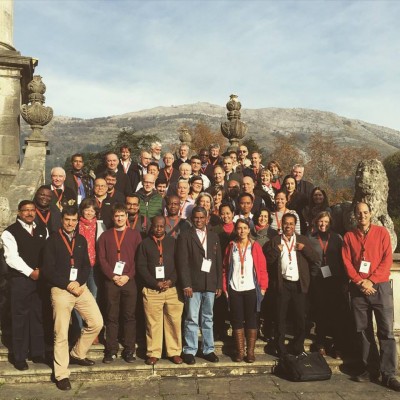
From November 17th-20th, fifty-five Jesuits and collaborators gathered in Loyola, Spain for a meeting organized by the Social Justice and Ecology Secretariat. The meeting brought together the various networks of the Global Ignatian Advocacy Network (GIAN) to share their experiences, and plan for better engagement in the social apostolate.
In an interview at the meeting, Fr. Francisco Javier Álvarez de los Mozos, Secretary for Justice and Ecology said: "There are many global apostolic challenges for the Jesuit and Ignatian family. I dream that we can become a large and much better structured body serving the needs of the poor in the world. Networking is a must today. It respects local autonomy while at the same time allowing us to work together for a common cause."
The Global Ignatian Advocacy Networks (GIAN) include four thematic areas: 1) Migrations, 2) The right to quality education for all, 3) Ecology and 4) the governance of natural and mineral resources
At the same time, other networks that support our Universal Mission were present: the Xavier Network, which brings together international development NGOs and mission offices of the Society of Jesus. And Jesuit Networking, which supports collaborative initiatives within the Society of Jesus, through communication, as well as other resources.
“The group of people gathered together in Loyola at "Networking for Justice" wanted to include the principal lessons learned over these past few days in a document that can serve as a testimony of what we have shared this week and to generate motivation among other groups and organizations that want to continue this reflection. We are incredibly grateful for the opportunity to reflect on the experience of working together over the years and to continue looking toward new projects, processes and structures that will help our shared Mission in the future.
Convinced that the Society of Jesus has the necessary conditions for greater international collaboration, we are moved by the desire to respond better to global challenges with institutional articulations at the regional and global levels. Many of these initiatives are already active, others are just getting started, and many more are on the way. Hopefully, this reflection will help all of us to continue ongoing discernment about how to better respond to increasingly complex and interconnected global realities.”
